


There are lots of websites with tempting offers of quick and easy money working from home. But in reality, they’re likely to be from scammers looking to get gullible users to work for them for free and advertise their “business.” This article from Kaspersky demonstrates the operation principle of several such schemes and gives tips on how to avoid falling victim to them.
Many scams in one
Who wouldn’t want to earn money for doing regular online stuff: taking surveys, watching videos, playing games, and other simple tasks? That’s how scammers lure victims to one of the sites.

The home page of the “platform” is overflowing with offers of easy-earning jobs. Scammers promise new recruits a whopping US$200 a day. Plus a US$25 signing-up bonus!
Of course, there are numerous reviews from grateful “users” who have already become rich. But if you bother to read them, you’ll spot a lot of grammatical mistakes.
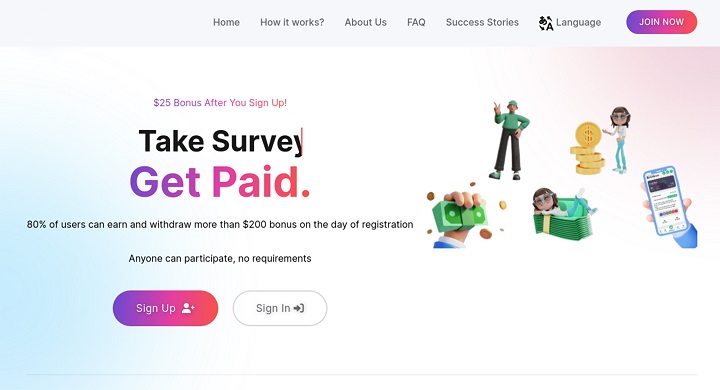
To earn money on the “platform”, you are asked to complete various tasks, such as testing apps, playing games, sharing a link to the site with friends, and the like.
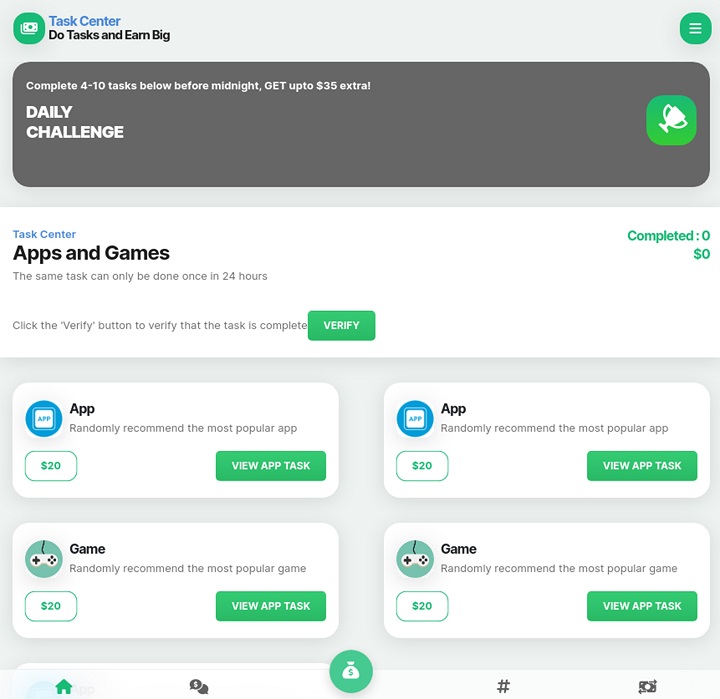
In fact, all these “tasks” are just links to other scam resources. By visiting them, users create traffic to cybercriminals’ sites. This improves their position in search results. And also, cybercriminals may have their own footfall KPIs (key performance indicators).
When the victim tries to get their “money” (the home page promises that this can be done through popular services like Cash App, Venmo, PayPal and others), they discover that they must first earn at least US$200.
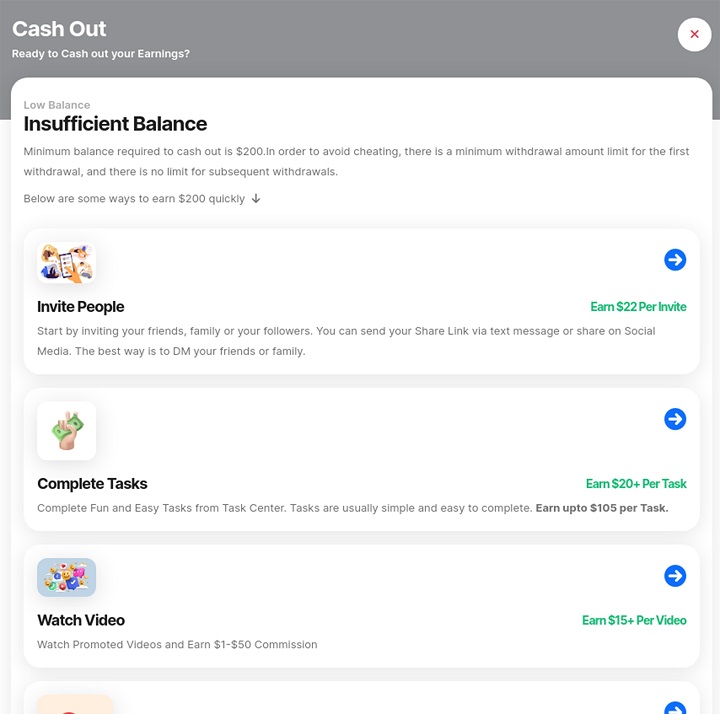
Sure, you won’t see any payout even if you do “earn” 200 bucks.
Nor can it be ruled out that the scammers’ domain won’t simply be blocked before a user even tries—such sites have a very short lifespan. After getting blocked, the scammers will get another domain and launch the whole scheme again with new victims.
The scam itself is quite international. Besides English, the cybercriminals’ website is available in nine other languages. Although these versions look less professional.
Share it with the whole world
Now let’s talk about a similar site with a more primitive design but with a different mechanism for making money from naive users.
The victims are offered two ways to earn. The first is to share the link and invite “referrals” to the website: you get US$1 for every 100 people. What’s more, the site supposedly lets you withdraw funds after accumulating just US$20. To earn this amount through inviting referrals, you need to attract 1500 users to the site (you get US$5 for signing up).
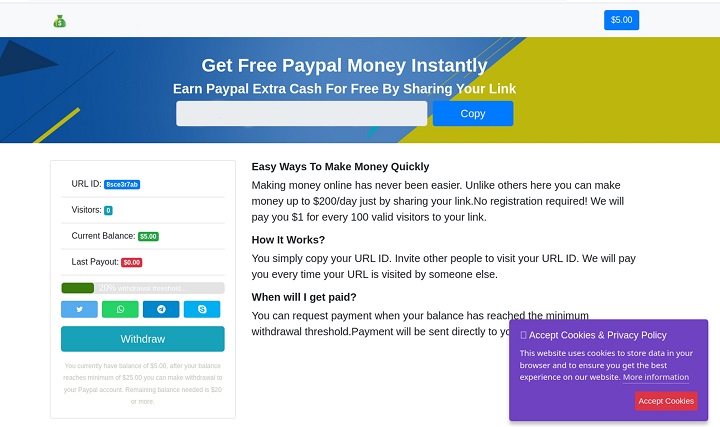
Sounds hard, but things aren’t all that bad, you have a chance to earn US$50 right away. But for this you’ll have to play the scammers’ game — by endlessly refreshing the page so that the two images match. They won’t of course.
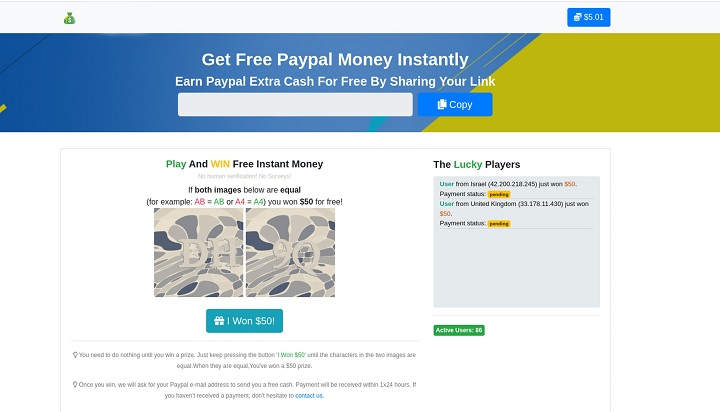
When the victim goes to the site, they are immediately asked for permission to display browser notifications. Through these, the cybercriminals distribute ads for various other scams or relatively legit adult sites. That’s the main objective: to lure as many victims as possible who will give this permission.
And the image-matching game helps the scammers boost traffic to their own site and improve its search visibility.
How to avoid falling victim?
- To avoid falling for online job scams:
- Don’t believe promises of easy money.
- Don’t enter payment information on dubious websites.
- Read our post on how to spot scammers.
- Use a robust security solution that will warn you before visiting suspicious sites and keep your money and data out of cybercriminals’ hands.
1 Comment
Thank you for sharing such an informative and well-crafted blog post. The information you provided was valuable, and I appreciated the practical examples you included. To delve deeper into this subject, click here.