


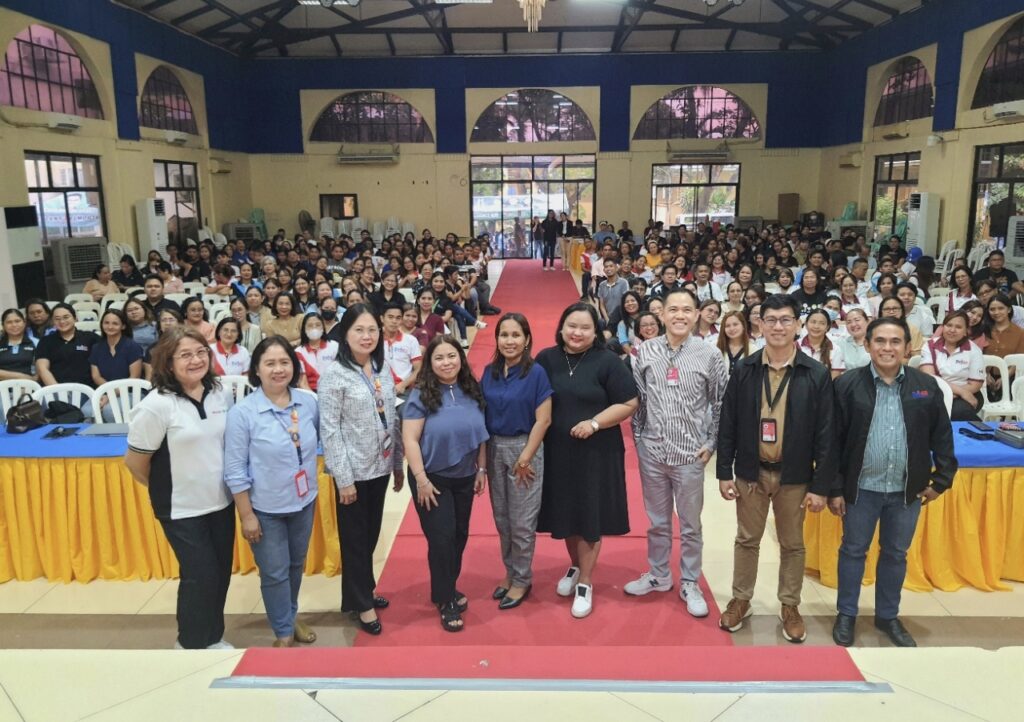
The Department of Education Schools Division Office of Quezon City strengthens learning resiliency in District 4 through the adoption of the Central Visayan Institute Foundation’s Dynamic Learning Program (CVIF-DLP). Nearly 300 teachers from public high schools are now onboard the pandemic-tested approach that helps students learn more independently.
The district adopted the resilient teaching strategy after national achievement tests showed weaker-than-expected performance among learners. District 4 schools now implementing CVIF-DLP include Krus Na Ligas High School, Manuel A. Roxas High School, Quezon City High School, and Dr. Josefa Jara Martinez High School.
“We know our teachers give their best, but their expertise is not always reflected in our students,” said Dr. Leonilo C. Angeles, Public Schools District Supervisor of DepEd SDO Quezon City. “Maybe the traditional way of teaching is no longer effective for today’s learners.”
The CVIF-DLP promotes ‘learning by doing’. At its core is the Learning Activity Sheet, a single-page material that guides students through a lesson. It breaks down complex topics into manageable tasks they can complete at their own pace with minimal teacher intervention.
“Through the CVIF-Dynamic Learning Program, we promote the habit of writing and reading among our students. These help build critical, analytical, and problem-solving skills,” added Dr. Angeles.
The strategy also employs a parallel class scheme where an expert teacher can handle three classes simultaneously, supported by two facilitators—helping address the shortage of instructors. To ensure students stay focused on core lessons, the program introduces strategic rest and study periods, scheduling skills-based subjects like music, arts, and physical education midweek.
The DepEd Central Office has likewise recognized the potential of the CVIF-DLP. The agency recently forged a partnership with PLDT and Smart, and CVIF to expand the Dynamic Learning Program across public schools nationwide. The initial rollout will cover 450 schools frequently affected by severe weather disturbances, classroom and teacher shortages, and overcrowding. DepEd also plans to use DLP as the default methodology during disruptive events.
“For more than a decade, PLDT and Smart have supported the CVIF-DLP as a crisis-resilient pedagogy that ensures no learner is left behind, regardless of their situation,” said Stephanie V. Orlino, AVP and Head of Stakeholder Engagement at PLDT and Smart.
PLDT and Smart remain committed to engaging like-minded partners to ensure #NoLearnerLeftBehind remains a reality. Support for the CVIF-DLP highlights the PLDT Group’s role in helping the country advance UN SDG 4 on Quality Education.